Subscribe to feed

About This Blog...

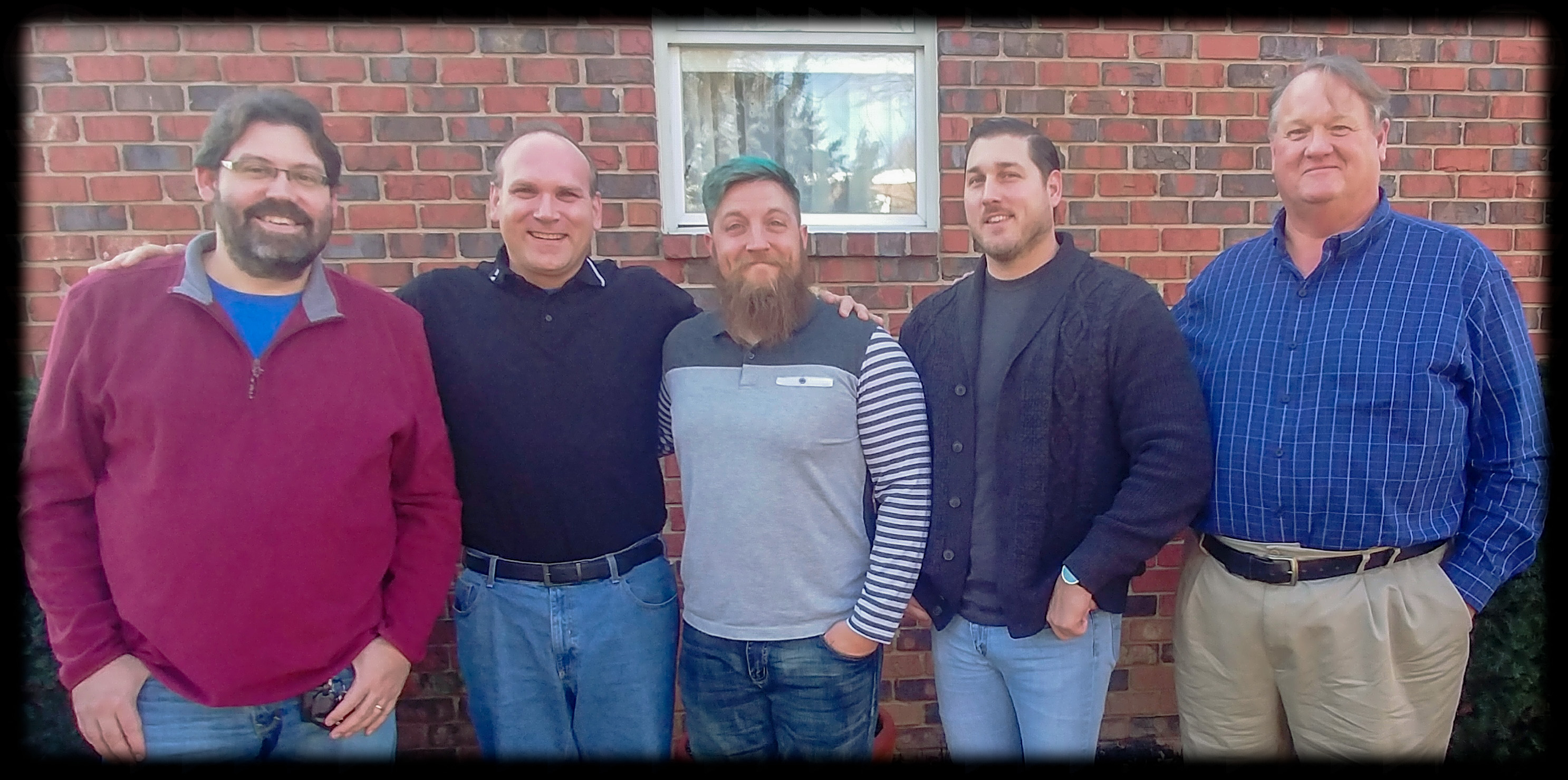
Jim Brown has been married to Lisa since 1980. They have three married children--Jason (Melody), Jared (Katie) and Jennifer (Dan).

In 1991, Jim led the church planting team that established Crossroads Community Church in the Frankford section of Philadelphia. With support from the Fellowship of Grace Brethren Churches, MetroGrace was established in 1999; Jim has served as its director since inception. And in 2004, Jim began his pastoral ministry at Crossroads Community Church in the Holmesburg neighborhood of Philadelphia.

Jim holds a B.S. in Bible from Philadelphia Biblical University, an MDiv. from Grace Theological Seminary and a DMin. from Westminster Theological Seminary.   


Archives

Recent Posts


08
Entrusting Disciples to God
May 8, 2013

Early church planters recognized that their responsibility to establish new believers in the faith depended upon the continuing work of God. Strengthening was no mere human endeavor that facilitated some corporate structure. Establishment required transformed lives that embodied the faith initiated by the gospel. Toward that end, Paul entrusted Roman […] [READ MORE]


26
Strengthen Disciples
April 26, 2013

Church planters, who contact communities, advance the gospel, gain converts and gather a congregation must establish new believers in their faith. When parents welcome a new child to the world, their job has just begun. They must equip the child for life, laying a solid foundation that facilitates growth. To be […] [READ MORE]


17
Gather a Congregation
April 17, 2013

From the very beginning, New Testament believers made it a practice to gather together. As they awaited the promised Spirit, the followers of Jesus gathered in an upper room in Jerusalem. They prayed, studied Scripture, and made congregational decisions. “They all joined together constantly in prayer, along with the women and […] [READ MORE]


29
Seek Conversions
March 29, 2013

Those sent to plant urban churches advance the gospel so people will respond in faith, becoming children of God. Conversion occurs at a point in time as part of a process. Church planters must cultivate the soil for planting the seed of the gospel. They must live lives that exemplify the […] [READ MORE]


13
Practice the Gospel
March 13, 2013

Gospel proclamation is more effective when accompanied by gospel practices. Those who seek new converts in urban neighborhoods must live lives that reflect Christ’s values. When Christians do good deeds, they help the lost hear the good news. Conn urges this kind of holistic evangelism when he calls the church […] [READ MORE]


08
Proclaim the Gospel
March 8, 2013

The gospel is a verbally communicated message about God’s activity to satisfy the debt of sinful human beings through the sacrifice of Jesus Christ. God grants salvation to those who trust in the completed work of Christ. So, church planters must explain the good news to those who have not […] [READ MORE]


08
Advance the Gospel
March 8, 2013

Church planters sent to connect with a new community must advance the gospel. They should practice and proclaim the good news so that lost people can trust Christ. Through word and deed they must clearly communicate the good news that saves. Holistic evangelism must be the priority of urban church […] [READ MORE]


01
Providing Spiritual Direction
March 1, 2013

All three church planters cited the importance of prayer. Mark, particularly, made mention of prayer as it relates to building relationships. He recognized that many residents in the community are in need of prayer. He realized that most knew of no avenue to access the power of God. So, he […] [READ MORE]


21
Growing Relationships
February 21, 2013

When urban church planters make contact with new people, they hope to build growing relationships. In the context of that relationship they seek to introduce people to Jesus and help them grow as his followers. Each of them emphasized the need to build relationships. Matthew said, “We use relationships as […] [READ MORE]


13
Making Contacts: Vary Activities
February 13, 2013

Urban church planters must consider time, place, and type of activities when they want to make contacts. Those interviewed listed a variety of different activities. Some mentioned visitation. Usually this comes through the recommendation of a friend. Often the person being contacted is struggling. They might require prayer or some sort […] [READ MORE]


06
Making Contacts: Find Places
February 6, 2013

Urban church planters make contacts by “getting out into the streets” or “walking the streets.” This is important. In these closely connected neighborhoods, the planter’s presence can become an expected part of the community. Their neighborhoods are easily walked and they can focus ministry within walking distance of their base […] [READ MORE]


09
Making Contacts: Invest Time
January 9, 2013

Urban church planters want to meet people that they can lead toward faith in Jesus Christ and membership in his family. While each person uses their unique personality to accomplish this task, there are some similarities that may be helpful for those preparing to plant an urban church. It is important […] [READ MORE]


02
Diverse Communities
January 2, 2013

Community-based church planting helps resolve this issue. It prevents church planters from being overwhelmed with the needs of an entire city, focusing their attention on a smaller group. Choosing a geographically identified community limits and deepens ministry possibilities. It limits ministry to residents within a defined community. It deepens ministry […] [READ MORE]


19
Unifrom Communities?
December 19, 2012

Some missiologists believe that church planters should direct their witness toward uniform groups. Donald McGavran says, “People like to become Christians without crossing racial, linguistic or class barriers” (1990, 163). He advocates reaching homogeneous units, each a part of the larger mosaic that forms the body of Christ. Wagner believes that […] [READ MORE]


14
Contact a Community
December 14, 2012

Secondly, contact must be made with a group of people. Paul’s missionary team began their ministry on the island of Cyprus, the home of Barnabas. They proclaimed the gospel in the largest city on the eastern side of the island, Salamis. Specifically, they began preaching in the synagogues of the […] [READ MORE]


04
DETERMINE AN URBAN CHURCH PLANTING PROCESS - Send Church Planters
December 4, 2012

DETERMINE AN URBAN CHURCH PLANTING PROCESS Those responding to the biblical imperative to plant new churches and train church planters must determine an urban church planting process. Analyzing Paul’s work, Hesselgrave delineates ten steps that he refers to as the Pauline Cycle (2000, 47). An adaptation of his list follows […] [READ MORE]


29
Urban Church Planting Assessment
November 29, 2012

Urban church planting is different from other forms of church planting; assessment must account for this difference. While all the traits Ridley described remain important, the urban context demands emphasis on certain qualities. Keller and Thompson list a few additional qualities that are critical for urban church planting (65). First, urban […] [READ MORE]


25
Church Planter Assessment
November 25, 2012

Church planter assessment can occur in a variety of ways. Early assessments were done in one-on-one meetings between the potential church planter and the assessor, usually someone trained in psychology. A battery of psychological tests was used over a one- or two-day period to determine the capacity of the candidate […] [READ MORE]


16
Measuring Leadership Ability
November 16, 2012

Those who model godly character, mold leadership methods, and manage leadership training should measure leadership ability in developing church planters. In some ways this evaluation occurs throughout the entire process. Urban leaders are watching apprentices grow in character. They see their disciples developing biblical leadership qualities. They gauge their progress […] [READ MORE]


14
Training Models Employed
November 14, 2012

Evaluating models of theological education might tempt leaders to decide that one is better than another. It is probably wiser to assume that many models will be required to train many different kinds of leaders for an increasingly complex urban culture. Experienced urban leaders must model godly character. They should forward […] [READ MORE]


09
Training Models - Church-based Theological Education
November 9, 2012

Jeff Reed believes that theological education should be church based: First the idea of seminary is not antithetical to the idea of church-based. As the American Heritage Dictionary points out, seminary has two specific references: a school, especially a theological school for training priests, ministers or rabbis [and] a place […] [READ MORE]


02
Training Models – The Missional Seminary Model
November 2, 2012

Banks follows Kelsey in advocating an educational approach. “First, this approach has a view of learning that revolves around active involvement in ministry through both practical reflection and reflective practice. . . Second, this means that theological education is not a higher stage of education, but a dimension of everyonersquo;s […] [READ MORE]


30
Training Models - Basic Communities
October 30, 2012

In view of the challenges and opportunities that come with training urban church planters, leaders should evaluate a variety of training models. Sweeping global transitions have put pressure on the established system of theological training. There is a need for a paradigmatic shift that might help the church address its […] [READ MORE]


19
Training Curriculum Should Be Culturally Relevant
October 19, 2012

Curriculum for urban church planters must be culturally relevant. Learners must be able to understand the symbols used to describe complex meaning. Those symbols must be able to address deep assumptions of the heart. Educational methods employed must be geared to the needs of the learner. They must promote clarity […] [READ MORE]


12
Training Curriculum Should Be Missional
October 12, 2012

Theological education that trains students in biblical interpretation and spiritual formation should be missional. Clear understanding of Scripture demands response from learners that involves them in the ministry of the church. As urban church planters gain more thorough understanding, their desire to be more like Christ will urge them to advance […] [READ MORE]


[ Older Posts ]